
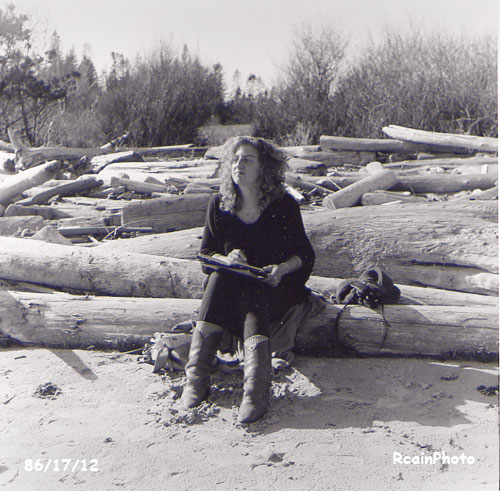
Mona Wood-Rolleiflex manufactured 1953-1955
Before the twentieth century square format in Art was uncommon.The rectangular
picture shape was and is vastly more popular than square formats. The square format
photo made its appearance in 1929 with the introduction of the first Rolleiflex, a square format camera.
Practicality played a bigger roll than aesthetics in the development of the square format.
Franke and Heideche designed this camera as a twin lens reflex with a luminous waist
level viewfinder. It would be difficult to turn the camera on it’s side to change the format.
i.e. the earliest hand held cameras (Leica) used viewfinders and the popular rectangular
format so that the operator merely had to turn the camera to change from landscape
to portrait format.
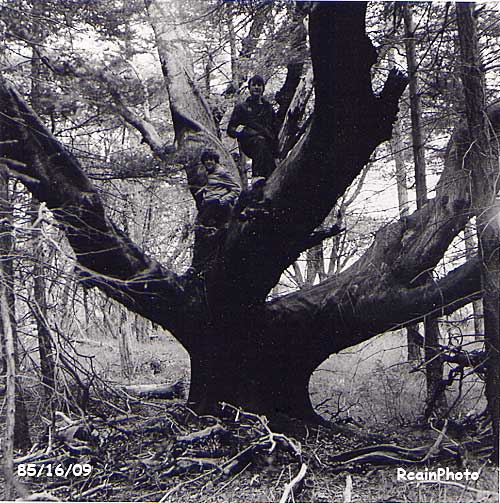
Composing in Square Format Photography
My favourite compositional device is to centre the important part of the image. This makes
square format pictures ideal for my type of photography. There seems to be two uses of
composition in this type of photography. First the photo in which the entire square is
filled with important parts of the image so that to crop into the standard rectangle would
trim off important elements. The second uses the whole square but more in an aesthetic way.
eg. white space around that could be trimmed off. Richard Avedon’s portraits come to mind.
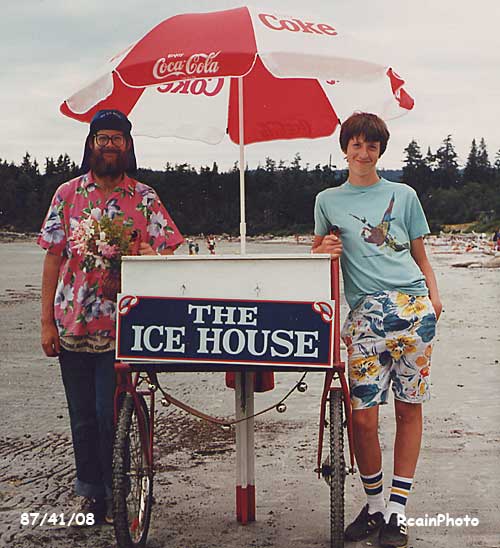
Composing Portraits with a Square Format
It’s in portraiture that the square format has gained it’s greatest acceptance. In the middle
of the twentieth century gifted photographers such as Irving Penn, Robert Doisneau, and
Richard Avedon used the Rolli not only for it’s compositional merits but for the quality
of the large negative. Diane Arbus used a Mamiya TLR for her incredible portraits.
In the early days the common editing technique was to crop the resulting square
negatives down to rectangles but, I suspect, the square image became more and more
attractive to the photographer.
Square Format in Photography
As is with 35mm and large format photography 6×6 imaging requires its own technique.
The setup and execution of the photograph is slower than the smaller
format and much quicker than 4×5,5×7,or 8×10 sheet film.
Composition? As I mentioned the square image lends itself to the way I see:
centering the image perhaps breaks a few rules but isn’t that what art is
all about?